A few weeks back, I took my analog camera — a Canon AE-1 Program — for a walk in Haugesund, a city on the west coast of Norway.
I also brought along my Canon 5D Mark II for three reasons:
- Take comparison shoot (which we will look at today)
- Verify that the light meter in the AE-1 is working correctly (it is)
- Be able to take more pictures once the 24 frames were used.
Just to get the technical out of the way.
Canon AE-1 Program:
- Fujifilm Superia 200 film, 24 frames
- 50mm f/1.8 lens
Canon 5D Mark II:
- RAW and JPG
- Kodak Portra 160 NC picture profile for the JPGs
- 50mm f/1.4 lens
- ISO 200 to match the film speed on the AE-1
Regarding the picture profile; the Kodak Portra 160 is from the 158 pack of picture profiles from Cinescopophilia. I have written about picture profiles earlier.
In the images below I have only used the RAW files and applied both the picture profile that was set in camera and the standard picture profile that comes with the camera using Canons Digital Photo Professional program.
I chose these images because of the colors. I do not believe they are masterpieces on their own.
Analog on the left, or top. Digital images on the right, or bottom.
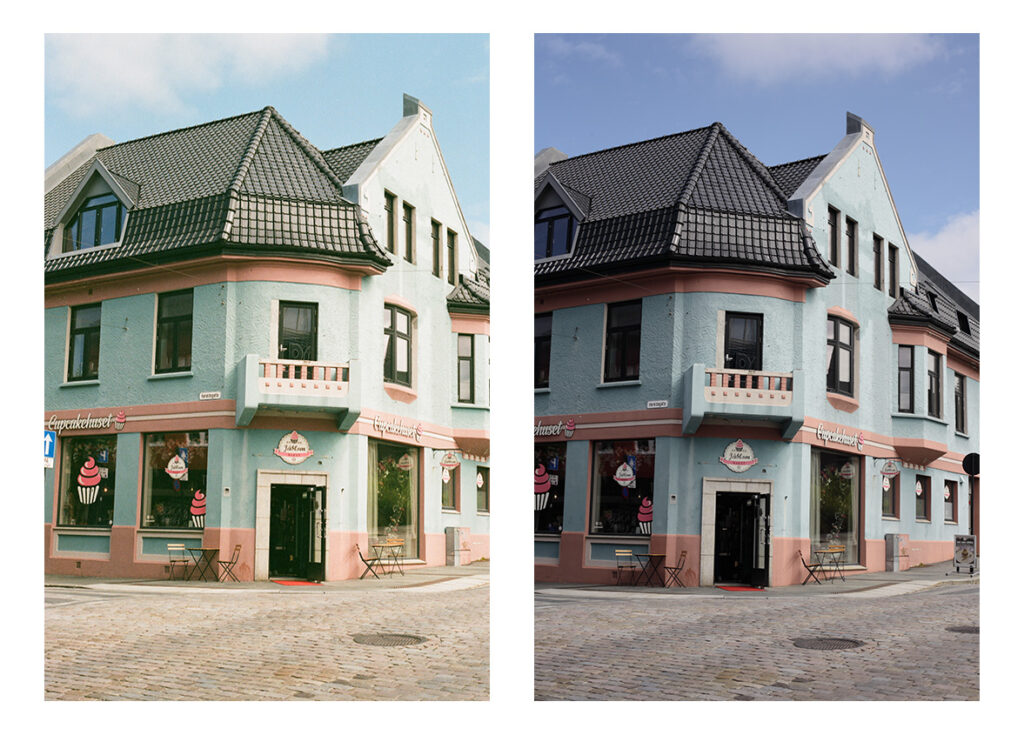
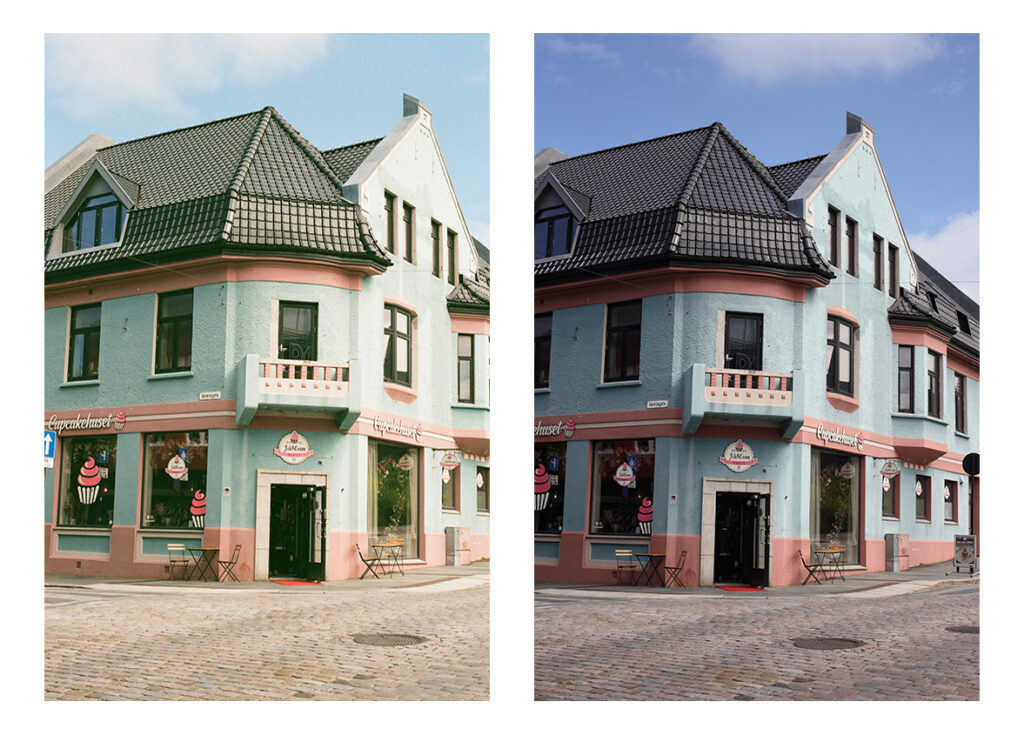
I tried some of the picture profiles in the 158 pack, but none of them got close to the colors produced by the Fujifilm Superia.
It’s quite distinct, no doubt about it.
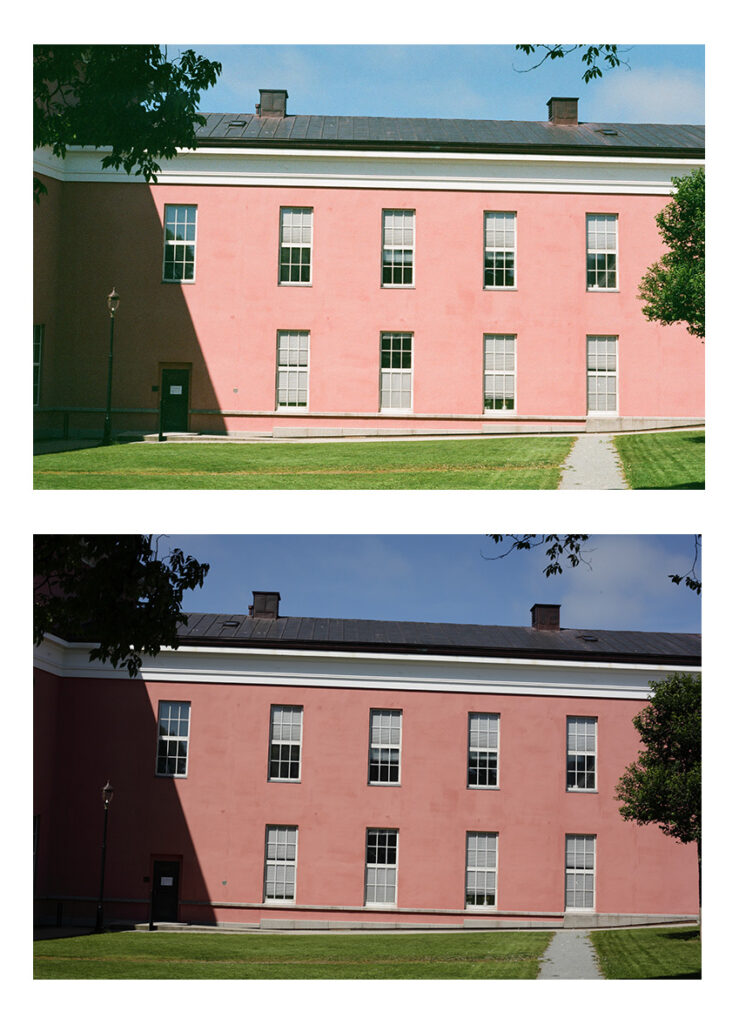
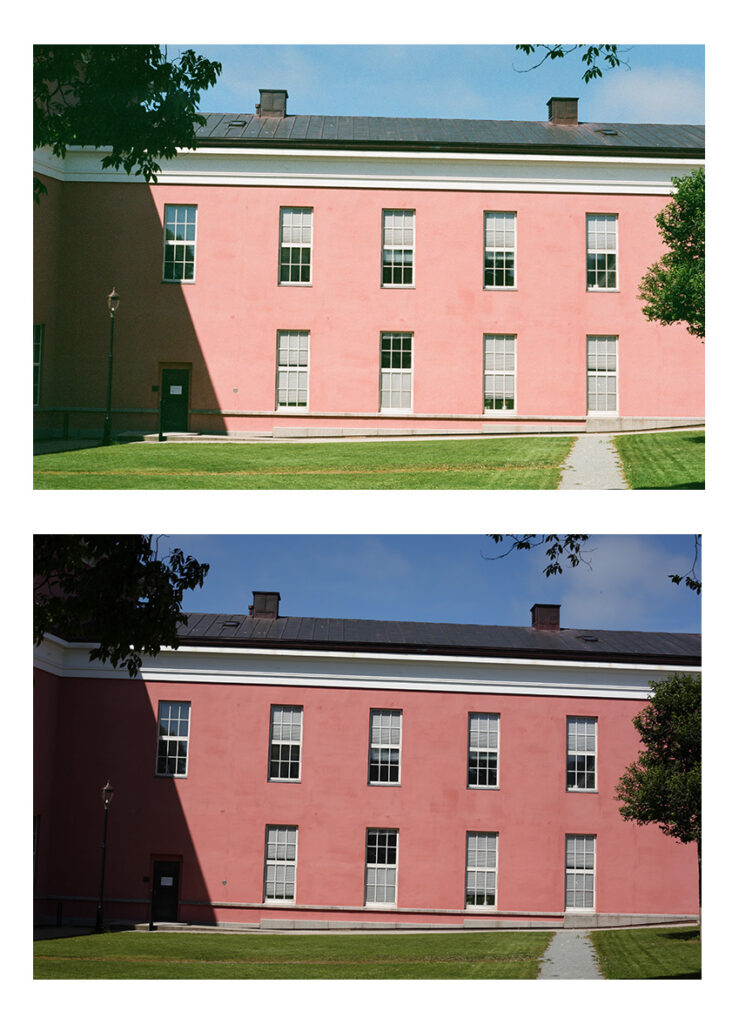
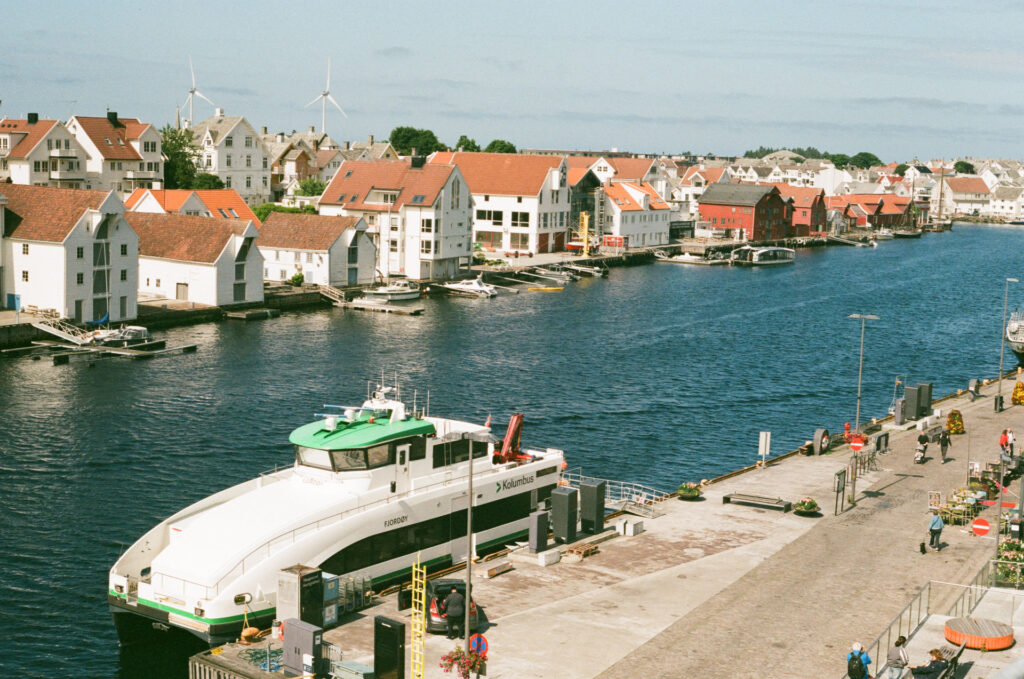
Once again it is easy to spot the difference.
The analog picture seems brighter, even thought the settings are identical. So either the film is a bit more sensitive, it has been processed slightly differently, or the light meter is a bit off1.
Since I took the images in RAW, I could try to push the exposure a bit to see if I can get a better match. However, I still don’t think it will match the colors. Especially on the blue in the first picture.
I also tried to do a double exposure, but that failed twice.
First, the double exposure was way off. Not even worth showing the image, it’s just a mess.
Secondly, I was not able to align the frame correctly, so the double exposure was both on the frame I intended to double expose, and part of the next frame, as show in the image below.
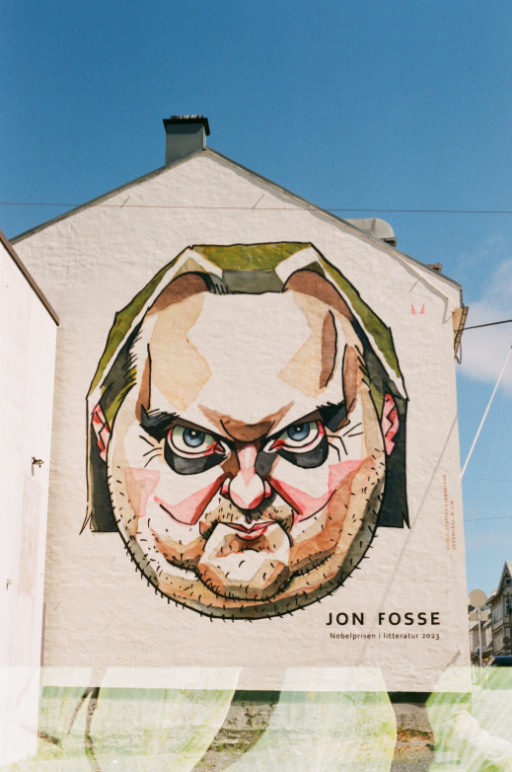
I think the Fujifilm Superia 200 has the “look and feel” of the 90s. It also handles overexposure a lot better than its digital counterpart.
The next film I will be shooting is the Kodak Gold 200. I will try to do the same exercise where I take the same shots with the Canon 5D Mark II with the same settings and compare them.
I’m also thinking about getting my hands on the Kodak Portra 160 since I have at least 3 picture profiles that claim to be close to that film.
- After I had published, it occurred to me that it could also be the timing of the shutter that is slightly “off” on the Canon AE-1 Program. If I adjust the exposure on the digital image by +0.75 it seems to match much better. ↩︎